
Why Following Vendor Advice on Social Media Can Hurt Your Antique Mall Booth
It Can Hurt Your Booth Quietly
If you’re a booth vendor, chances are you’re in at least one Facebook group for antique mall vendors, resellers, or handmade sellers.
On the surface, these groups look helpful.
You’ll often see things like:
- Vendors sharing what “worked for them”
- People posting their sales numbers
- Booth display ideas getting passed around
- Pricing strategies being debated
- Dozens of strong opinions about what vendors should be doing
The problem?
Most advice in vendor groups is unfiltered, context-free, and based on isolated experiences rather than repeatable booth strategy.
Following the wrong advice can quietly stall or even hurt your booth over time.
The danger of bad advice isn’t that your booth explodes overnight. It’s that you spend six months following a ‘proven’ strategy—buying the wrong inventory or over-styling your space—only to realize you’ve worked 40 hours a week for a $50 profit. That lost time is something you can’t get back
1. Most Advice Is Based on One Person’s Situation, Not Yours
You’ll often see posts like:
- “I raised my prices and my sales went up.”
- “I lowered my prices and everything flew out.”
- “I stopped restocking and sales stayed the same.”
- “I only stock smalls and I’m killing it.”
At first glance, this advice sounds helpful.
But what’s missing is context.
Things like:
- Their antique mall
- Their customer traffic
- Their booth rent
- Their inventory category
- Their booth size
- Their local customer base
- Their experience level
What worked for one vendor in one mall with one type of inventory can absolutely fail in another environment.
That’s why understanding the fundamentals of booth operations matters so much. If you’re new to booth selling, start with:
How Antique Mall Booths Work: A Complete Guide for New Vendors or you can start with my first book Vintage Hustle: How to Build a Profitable Booth in Today’s Antique Mall Market
Once you understand the mechanics of booths — rent, commission, inventory turnover, and booth layout — it becomes much easier to filter good advice from bad advice.
In Vintage Hustle: Building Booths That Last, one of the core principles is that your booth is its own business environment. Strategy has to be built around your specific situation, not copied blindly from someone else’s highlight reel.
2. Social Media Rewards Loud Advice, Not Good Advice
Social media platforms reward engagement, not accuracy.
That means the advice that spreads the fastest is often the advice that sounds the most confident.
Vendor groups tend to amplify things like:
- Strong opinions
- “This is the only way to do it” statements
- Oversimplified rules
- Hot takes that spark reactions
But booth success is rarely built on absolutes.
It usually comes from habits like:
- Observing customer behavior
- Testing display changes
- Tracking what actually sells
- Adjusting based on real booth performance
Many struggling booths don’t have a product problem — they have a booth structure problem.
Common structural issues include:
- Poor booth flow
- Confusing pricing
- Unbalanced inventory mix
- Overcrowded displays
I will say that I have personally noticed that some people tend to get on a soap box preaching this is what works best.
Then they will say do this, this, and this, like magic your problem will be fixed. The situation is never that simple.
I have seen some poor advice given, advice that in the end makes you want to give up. Just remember a booth is an actual business, whether you see it that way or not, so the problems are always multi-faceted as well as the solutions.
That’s why this site is full of articles and calculators.
It’s why I wrote the Vintage Hustle Series.
Me and Missy have been doing booths for almost 20 years. Rustique Relics has been in business for 10 years and most of our vendors are still with us. The advice I try to give is never going to be simple one-off answers.
If your booth isn’t selling the way you expect, this guide may help:
Why Your Antique Mall Booth Isn’t Selling because the cause is often something deeper than just product choice.
3. Survivorship Bias Skews What You See
One of the biggest problems with vendor groups is survivorship bias.
You mostly hear from vendors who are currently winning.
You rarely hear from vendors who:
- Followed bad advice and quietly failed
- Invested heavily in trends that didn’t sell
- Burned out trying to chase every new idea
- Left the antique mall business entirely
This creates a distorted perception where it seems like:
“Everyone else is killing it.”
In reality, most booths struggle at times.
A common issue many vendors underestimate is inventory balance.
Booths often struggle when they have:
- Too little inventory
- Too much dead inventory
- Too many similar items
- Not enough pricing variety
That’s exactly why we wrote:
How Much Inventory Does an Antique Mall Booth Really Need? because inventory balance is one of the biggest drivers of booth performance.
4. Trends Move Faster Than Booth Reality
Social media constantly pushes trends.
You’ll see advice promoting things like:
- Trending color palettes
- Viral display styles
- “Hot” product categories
- Aesthetic-first booth layouts
But booths don’t pivot instantly.
Changing your booth can involve:
- Buying new inventory
- Reworking displays
- Moving furniture
- Adjusting pricing
- Reorganizing your layout
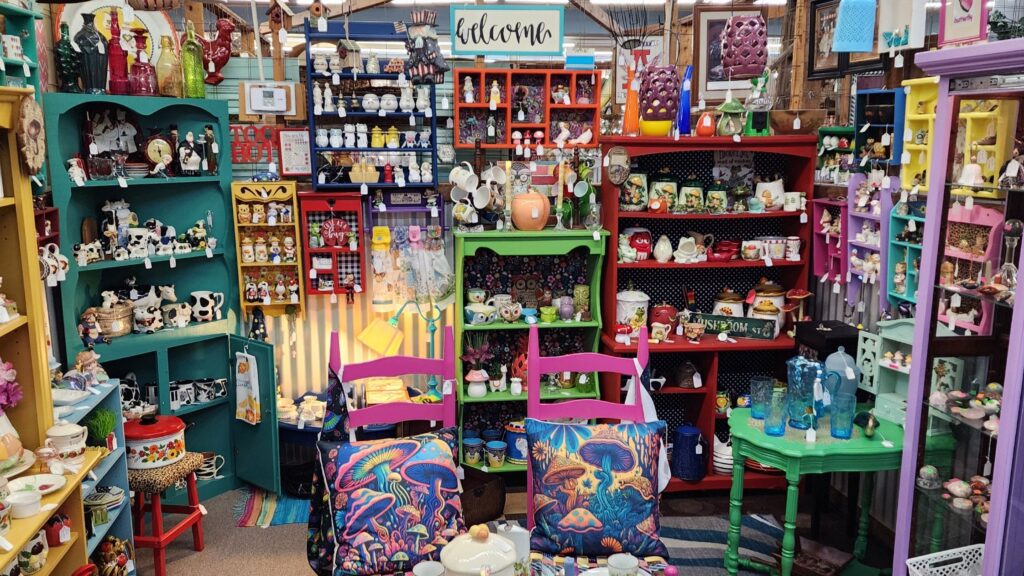
And sometimes trends create booths that look great online but perform poorly in real life.
Problems can include:
- Displays that distract from the products
- Too many small items overwhelming customers
- Layouts that block natural walking flow
- Designs that don’t match the local market
A booth is not just decoration — it is a selling environment.
That’s why booth layout and customer flow matter so much, which we cover in:
How to Design an Antique Mall Booth That Sells because the best booths are designed around customer behavior, not just visual trends.
5. Group Advice Often Encourages Reaction, Not Strategy
A lot of vendor group advice is reactive.
You’ll see posts like:
- “My booth is slow, what should I change?”
- “Sales dropped this week, what should I do?”
- “Should I run a sale?”
Quick fixes feel productive.
But most of the time they treat symptoms instead of causes.
The better approach is understanding the mechanics of booth performance.
For example, vendors should understand things like:
- What their booth needs to make each month
- How inventory turnover affects profitability
- How rent relates to booth performance
- When a booth has actually plateaued
We explore that in:
How Much Should an Antique Mall Booth Make? because once you understand what your booth should be producing, it becomes much easier to diagnose what’s going wrong.
Red Flags: How to Spot “Garbage” Vendor Advice
If you’re looking for help and run across a “masterclass” or a “viral video course,” ask yourself these three things before you click ‘buy’:
- Does the “Expert” actually have a booth right now? It’s easy to give advice when you haven’t had to pay rent or lug furniture in five years. If they aren’t currently dealing with the same market shifts you are, their advice is likely outdated.
- Is the advice “One Size Fits All”? If a course tells you that every booth needs to look like a Pinterest board or that everyone should stop selling smalls, run. A real strategy adapts to your mall’s foot traffic and your local economy.
- Are they selling “Vibes” instead of “Math”? If a seminar spends 45 minutes on “finding your aesthetic” and zero minutes on inventory turnover rates or rent-to-sales ratios, they aren’t teaching you a business—they’re selling you a hobby.
Does the “Expert” see the full picture?
Most people giving advice only see their own small corner. As a mall owner and a vendor for 20 years, I see the “before and after” of hundreds of booth strategies. I’ve watched vendors follow viral trends and end up with zero sales, and I’ve watched vendors use a solid framework to build a retirement income. If a seminar guru hasn’t seen the actual books of a multi-vendor business, they’re just guessing.
Final Thought
Vendor groups can be encouraging.
They can spark ideas.
They can help vendors feel less alone.
But they should never become your entire business strategy.
If you want your booth to grow intentionally instead of reacting emotionally to whatever trend or opinion appears online, you need something stronger than a social media feed.
You need a framework. This is why my Vintage Hustle Book Series exists to give you a framework and actionable levers to use.
Related Antique Booth Vendor Guides
If you’re trying to build a stronger booth, these guides may help:
- How Antique Mall Booths Work: A Complete Guide for New Vendors
- Starting an Antique Mall Booth Business: A Step-by-Step Guide
- How to Design an Antique Mall Booth That Sells
- How Much Inventory Does an Antique Mall Booth Really Need?
- Why Your Antique Mall Booth Isn’t Selling
- How Much Should an Antique Mall Booth Make?
Frequently Asked Questions About Antique Mall Booths
Can following vendor advice on Facebook hurt your antique booth?
Yes. Advice in vendor groups is often based on one vendor’s experience in a specific mall, with different rent, customers, and inventory. What works in one location may fail in another. Successful vendors evaluate advice against their own booth performance before making changes.
Why does my antique mall booth struggle even when others are doing well?
Booths operate under different conditions including location, rent cost, product mix, and display layout. Sales problems are often caused by issues such as inventory balance, pricing clarity, or booth design rather than the products themselves.
Should you follow trends in antique mall booths?
Trends can provide ideas, but they shouldn’t drive your entire booth strategy. Booths that perform consistently focus on inventory turnover, clear pricing, good layout, and steady restocking rather than constantly chasing trends.
How do successful antique booth vendors make decisions?
Successful vendors rely on things like:
- Tracking booth performance
- Observing customer behavior
- Maintaining strong inventory levels
- Testing small changes over time
Instead of reacting to every suggestion or trend online.
What is the best way to grow an antique mall booth?
Long-term booth growth usually comes from:
- Keeping inventory levels healthy
- Maintaining strong booth layout and flow
- Pricing items clearly and competitively
- Restocking regularly
- Evaluating booth performance monthly
Free Vendor Resources
We have a number of free booth vendor tools to use if you need help with figuring out your numbers. You will see that each calculator serves a different purpose but for an all in one I recommend the Booth Profit Calculator Pro. These tools were designed with the principles laid out in the Vintage Hustle Book Series.
Vintage Hustle Book Series
If you’re interested in learning more about booth strategy, inventory planning, and vendor growth, the Vintage Hustle series dives deeper into the principles behind building profitable antique mall booths. If you prefer to get through Amazon or ebook click here.