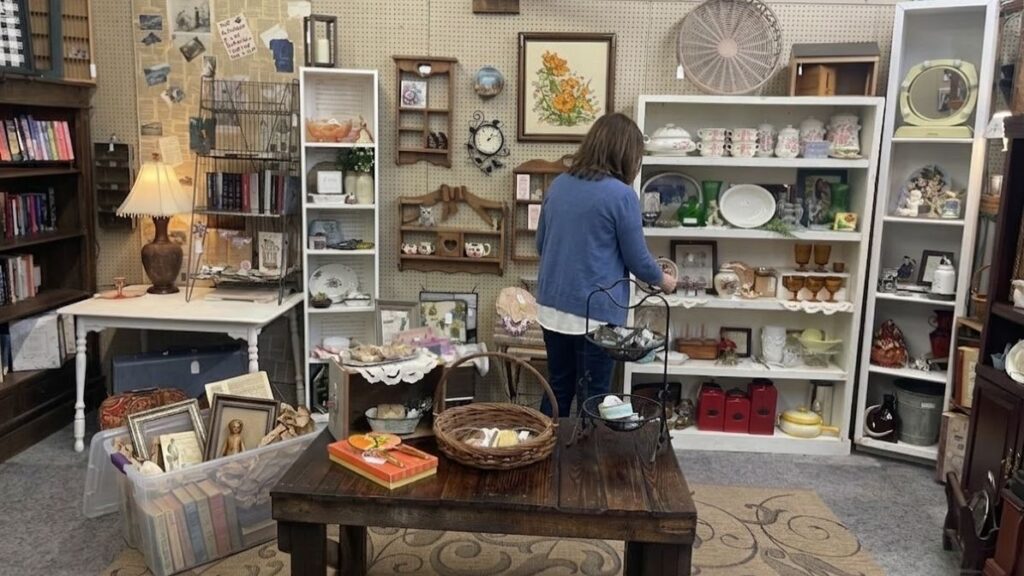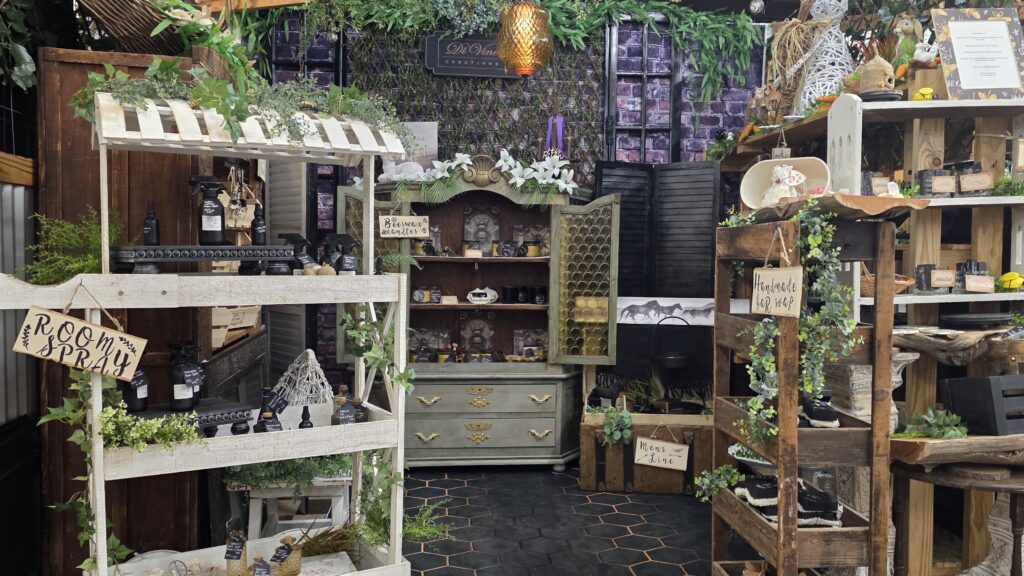
One of the most common questions new antique mall vendors ask is:
“How much inventory should I put in my booth?”
It’s an important question because the amount of inventory inside a booth can directly affect how well that booth performs.
- Too little inventory and the booth can feel empty.
- Too much inventory and the booth can feel cluttered.
The goal is finding the right balance between selection, presentation, and turnover.
Understanding how inventory works inside an antique mall booth can help vendors build spaces that generate steady sales.
We have developed the Booth Profit Calculator to help you estimate how much value in inventory your booth should have based on what you input.
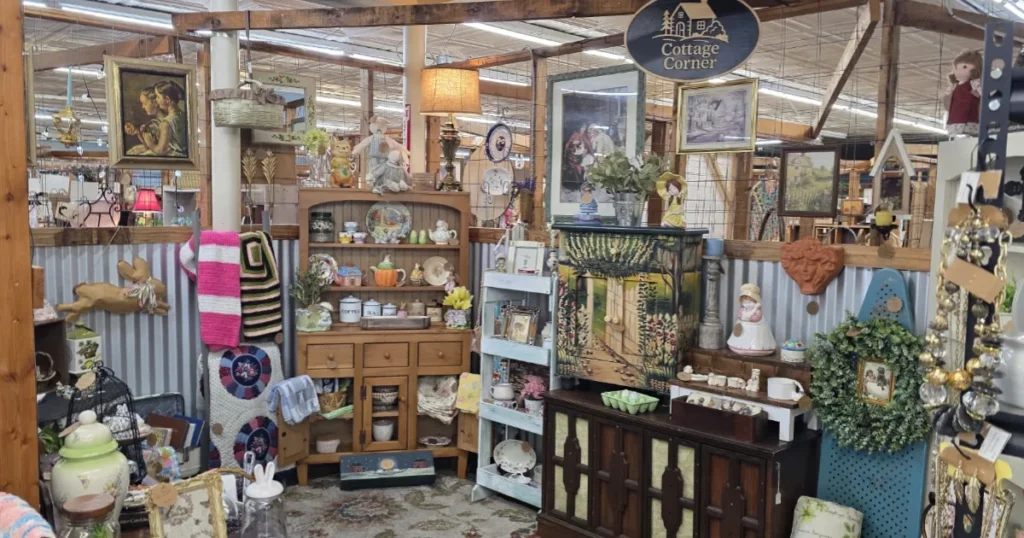
Why Inventory Depth Matters
Customers visit antique malls because they enjoy the experience of discovering interesting items.
A booth with limited inventory gives customers fewer opportunities to make a purchase.
When shoppers walk into a booth that only has a handful of items, they often scan it quickly and move on.
On the other hand, a booth with strong inventory depth creates more chances for buyers to find something they want.
More items mean:
- more browsing opportunities
- more price points
- more impulse purchases
- more chances for customers to connect with something
This is why inventory depth is one of the most important factors in booth performance.
The 4×–6× Inventory Guideline
A useful guideline many vendors follow is maintaining inventory with a sell value between four and six times the monthly booth rent.
This approach helps ensure that a booth contains enough inventory to support consistent sales without becoming overcrowded.
Example:
Monthly Booth Rent: $200
Recommended inventory sell value:
Minimum inventory level: $800
Healthy inventory level: $1,200
These numbers represent the total selling value of the items currently inside the booth, not the cost paid for them.
This range provides a strong starting point for most booths.
What Happens When Inventory Is Too Low
When inventory drops below healthy levels, booths often begin to slow down.
Low inventory can cause several problems:
- customers see fewer items
- empty spaces make the booth feel picked over
- shoppers assume there is nothing new to discover
In many cases, declining sales are simply the result of inventory becoming too thin.
Regular restocking helps maintain the appearance of abundance that customers enjoy when browsing.
What Happens When Inventory Is Too High
While inventory depth is important, too much inventory can create the opposite problem.
Overloaded booths may feel:
- cramped
- cluttered
- difficult to browse
When shelves are packed tightly with merchandise, shoppers may struggle to see individual items.
Successful booths usually maintain clear visual spacing while still offering plenty of selection.
Good presentation allows customers to easily spot items that interest them.
Inventory Turnover Is the Real Goal
Inventory inside a booth should not remain static.
The most successful vendors focus on inventory turnover.
Turnover means that items regularly sell and are replaced with new merchandise.
Consistent turnover creates several benefits:
- returning customers see new items
- booths maintain fresh displays
- sales momentum builds over time
Even small restocking visits can help keep a booth feeling active and interesting.
How Often Should Vendors Restock?
There is no single schedule that works for everyone, but many vendors find success by checking on their booth regularly.
Common restocking patterns include:
- weekly visits
- bi-weekly visits
- restocking whenever inventory begins to thin out
Frequent attention keeps booths organized and prevents large empty spaces from forming.
Estimating Inventory Value
New vendors sometimes struggle with estimating the total selling value of their booth inventory.
One simple method is to add up the price tags of all items currently in the booth.
For example:
20 items priced at $10 each = $200
10 items priced at $25 each = $250
5 items priced at $60 each = $300
Total sell value = $750
If booth rent is $200 per month, this inventory level would fall slightly below the recommended 4× guideline.
Adding more items would help increase the chances of generating stronger sales.
Using Inventory Planning to Improve Booth Performance
Vendors who consistently monitor inventory levels often notice patterns that help improve performance.
For example, they may discover that:
- certain price ranges sell faster
- specific categories attract more attention
- seasonal items perform better at certain times of year
Paying attention to these patterns allows vendors to refine their inventory strategy over time.
Estimating Booth Profit Potential
Inventory is only one piece of the puzzle.
Other factors that influence booth profitability include:
- booth rent
- commission percentage
- credit card processing fees
- cost of goods sold
Before committing to a booth, it can be helpful to estimate how these numbers work together.
Tools like our Booth Profit Calculator can help vendors estimate:
- break-even sales levels
- monthly profit potential
- inventory requirements
Understanding the financial side of booth selling helps vendors make more informed decisions.
Final Thoughts
A well-stocked booth gives customers something to explore and increases the chances of making a sale.
Maintaining inventory with a sell value around four to six times the monthly booth rent provides a practical starting point for most vendors.
Combined with good presentation, realistic pricing, and regular restocking, the right inventory depth can help create booths that perform consistently over time.
Related Guides for Booth Vendors
If you’re learning about antique mall booths, these guides may also help:
Free Vendor Resources
We have a number of free booth vendor tools to use if you need help with figuring out your numbers. You will see that each calculator serves a different purpose but for an all in one I recommend the Booth Profit Calculator Pro. These tools were designed with the principles laid out in the Vintage Hustle Book Series.
Vintage Hustle Book Series
If you’re interested in learning more about booth strategy, inventory planning, and vendor growth, the Vintage Hustle series dives deeper into the principles behind building profitable antique mall booths. If you prefer to get through Amazon or ebook click here.