For many people who love vintage items, antiques, or collectibles, renting a booth in an antique mall sounds like a dream. You get to curate your own space, sell items you enjoy finding, and potentially build a profitable side business.
But before jumping in, it’s important to understand how antique mall booths actually work.
In this guide, we’ll walk through the fundamentals of the antique mall booth model, including how vendors make money, how booth rent works, and what it really takes to succeed.
In this guide you’ll learn:
- What an antique mall booth is
- How vendors make money
- How booth rent and commission work
- How vendors get paid
- What makes a booth successful
What Is an Antique Mall Booth?
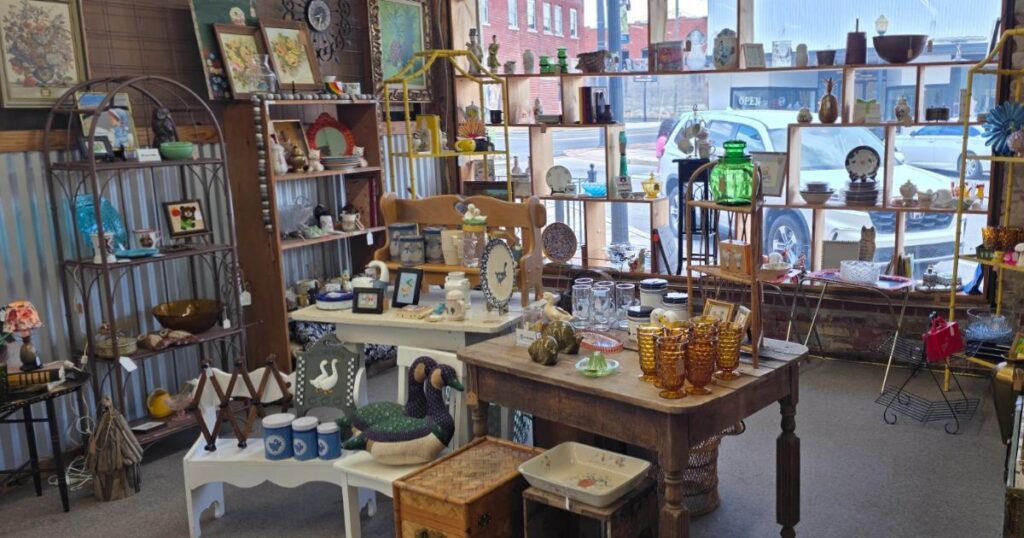
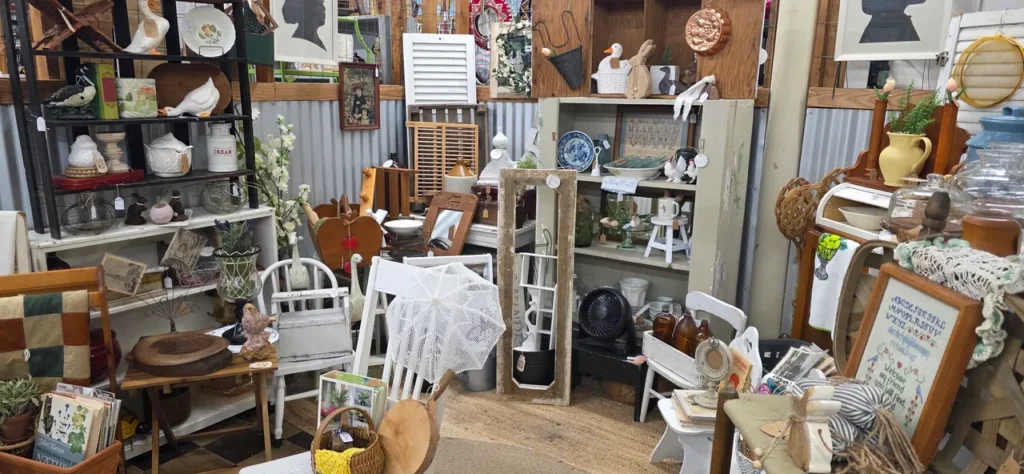
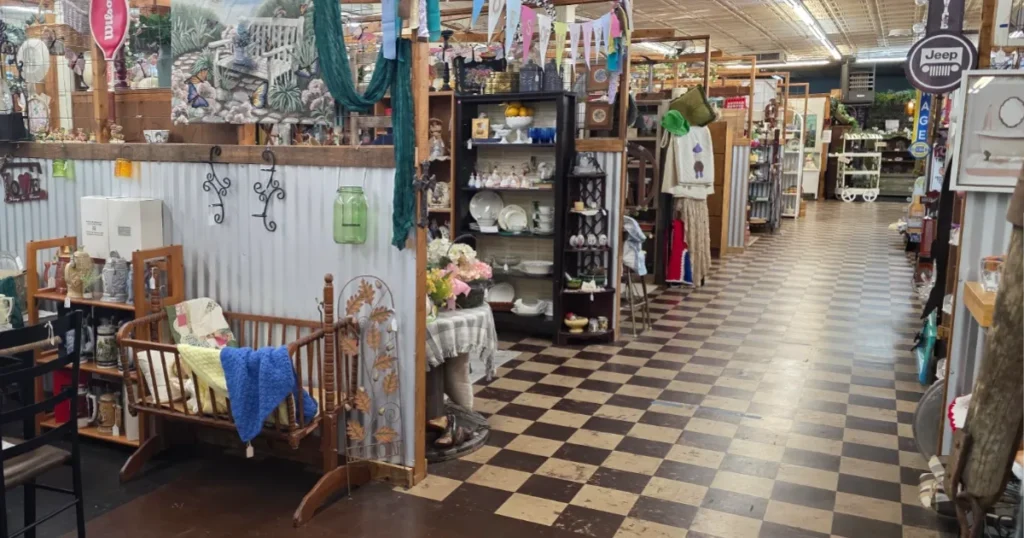
An antique mall is a large retail store made up of many individual vendor spaces. Each vendor rents a booth and fills it with items they want to sell.
Customers walk through the store just like any other retail shop, but instead of one owner stocking all the inventory, each booth belongs to a different vendor.
Most antique malls include a mix of:
- antiques
- vintage décor
- collectibles
- handmade goods
- furniture
- boutique items
Because dozens of vendors contribute inventory, the store becomes a constantly changing marketplace.
How Booth Rent and Startup Costs Work
When you rent a booth in an antique mall, you typically pay a monthly booth rent.
Rent usually depends on:
- booth size
- location inside the store
- local demand for space
Booths near entrances or main walkways often cost more than booths tucked into quieter areas of the store.
Across many antique malls, booth rent often ranges between:
$100 and $400 per month for smaller spaces.
Larger booths or prime locations may cost more depending on the market.
In addition to rent, most antique malls also charge a sales commission and credit card transaction fees if they apply to the sale.
A common structure looks like this:
Example:
Monthly Booth Rent: $200
Commission: 10%
If you sell $1,000 in merchandise during the month:
Commission = $100
Rent = $200
Your payout = $700
From that $700 you still need to cover your cost of goods.
This means your true profit depends on both inventory cost and sales volume.
How Vendors Get Paid
The antique mall handles the actual checkout process for customers.
Customers bring items from any booth to the front counter and pay the store. The store’s point-of-sale system tracks which vendor sold each item.
At the end of the month, vendors receive a payout based on their sales.
Most antique malls provide vendors with reports that show:
- rent
- total sales
- commission charged
- transaction fees (if applicable)
What Makes a Booth Successful
Many new vendors assume that simply filling a booth with items is enough.
In reality, successful booths operate more like small retail stores.
Strong vendors typically focus on:
Inventory Depth
One of the biggest mistakes new vendors make is not having enough inventory.
A good rule of thumb used at Rustique Relics is to maintain inventory with a sell value of roughly 4× to 6× your booth rent.
This helps ensure that customers have enough selection and that items can turn over consistently.
Pricing to Sell
Successful vendors price items based on market value and customer behavior, not emotional attachment.
Items priced to sit will often sit for months. Items priced correctly move quickly and create momentum inside a booth.
Presentation and Layout
A booth should feel curated and easy to browse.
Successful booths often include:
- clear focal points
- varied item heights
- balanced spacing
- seasonal refreshes
Customers should be able to quickly understand what the booth is about.
Restocking Frequently
Antique mall customers love discovering new items.
Booths that remain unchanged for long periods often lose customer attention.
Many successful vendors restock weekly or bi-weekly to keep their space fresh.
How Much Inventory Does a Booth Need?
Inventory is one of the biggest factors in booth performance.
A booth that looks sparse or picked over will usually struggle to attract attention from shoppers.
A helpful rule of thumb used at Rustique Relics is to maintain inventory with a sell value of roughly four to six times your booth rent.
For example:
If your booth rent is $200 per month, maintaining inventory with a sell value between:
$800 and $1,200
provides a healthy starting point.
This guideline helps ensure:
- enough selection for shoppers
- enough product to generate turnover
- enough inventory to support consistent sales
When inventory drops too low, customers often assume the booth has already been picked through.
Keeping the booth full and refreshed helps maintain interest and encourages browsing.
Typical Startup Costs for a Booth Vendor
Before renting a booth, many new vendors want to understand how much money it takes to get started.
Startup costs vary depending on booth size and inventory choices, but most vendors can estimate their investment by considering three main areas.
Booth Rent
Your first expense is the monthly booth rent, which typically ranges from $100 to $400 for smaller spaces in many antique malls.
Initial Inventory
Inventory is usually the largest startup cost.
Using the 4×–6× rent guideline mentioned earlier helps vendors estimate a realistic starting inventory level.
For example:
A $200 booth may require between $800 and $1,200 in merchandise to feel well stocked.
Display Fixtures
Most vendors also need a few display fixtures to organize merchandise effectively.
Common booth fixtures include:
- shelves
- small tables
- display cabinets
- risers or crates
- clothing racks
Many vendors find these items secondhand at garage sales, thrift stores, or estate sales.
Because of this, startup costs can vary widely.
Some vendors begin with only a few hundred dollars in inventory, while others invest several thousand dollars to fully stock their space.
Estimating Booth Profitability
Before renting a booth, it’s helpful to estimate whether the numbers make sense.
Factors that affect profitability include:
- booth rent
- commission percentage
- credit card processing fees
- cost of goods sold
- inventory turnover
To help vendors estimate these numbers, we have created a Booth Profit Calculator that allows vendors to explore different scenarios.
Using a tool like this can help determine:
- how much inventory you may need
- how much sales volume is required
- what level of profit might be realistic
Common Misconceptions About Booth Selling
“I just need a few good items.”
In reality, booths perform best when they have depth and variety.
“Higher prices mean more profit.”
Higher prices often mean lower turnover.
Many successful vendors prioritize consistent sales rather than maximizing the price of each item.
“Once the booth is set up, it runs itself.”
Even the best booths require:
- restocking
- seasonal adjustments
- pricing updates
- occasional layout changes
Is Renting a Booth Worth It?
For the right person, an antique mall booth can be a rewarding business.
Many vendors enjoy:
- treasure hunting
- curating displays
- interacting with collectors
- building a side income
But success rarely happens by accident.
It comes from understanding the system and operating the booth intentionally.
Final Thoughts
Antique mall booths are one of the most accessible ways to enter the vintage and resale business.
With the right approach to inventory, pricing, and booth management, vendors can build spaces that consistently generate sales.
Understanding how the system works is the first step.
Frequently Asked Questions About Antique Mall Booths
How much does it cost to start an antique mall booth?
Startup costs vary depending on booth size and inventory, but many vendors start with between $800 and $2,500 in inventory and display fixtures.
How much inventory should an antique mall booth have?
Many successful vendors maintain inventory with a sell value of roughly four to six times their monthly booth rent.
How often should antique mall booths be restocked?
Many vendors restock weekly or bi-weekly to keep their booths fresh and interesting for returning customers.
Are antique mall booths profitable?
Booths can be profitable when vendors maintain strong inventory depth, price items competitively, and refresh their displays regularly.Related Guides for Booth Vendors
Related Guides for Booth Vendors
If you’re learning about antique mall booths, these guides may also help:
- Starting an Antique Mall Booth Business: A Step-by-Step Guide
- Are Antique Mall Booths Profitable? What Vendors Should Really Expect
- How Much Inventory Does an Antique Mall Booth Really Need?
- Why Antique Mall Booths Fail and How to Fix Them
- How to Design an Antique Mall Booth That Sells
Free Vendor Resources
We have a number of free booth vendor tools to use if you need help with figuring out your numbers. You will see that each calculator serves a different purpose but for an all in one I recommend the Booth Profit Calculator Pro. These tools were designed with the principles laid out in the Vintage Hustle Book Series.
Vintage Hustle Book Series
If you’re interested in learning more about booth strategy, inventory planning, and vendor growth, the Vintage Hustle series dives deeper into the principles behind building profitable antique mall booths. If you prefer to get through Amazon or ebook click here.