How to Keep Your Antique Booth Looking Full Without Overspending
One challenge many antique mall vendors face is keeping their booth looking full and inviting without overcrowding the space.
A booth that looks empty can cause customers to walk right past it. At the same time, a booth that is packed too tightly with merchandise can make it difficult for shoppers to browse comfortably.
Successful vendors learn that keeping a booth visually full is not always about having more inventory. Often it is about how inventory is displayed and maintained over time.
The goal is to create a booth that feels abundant, organized, and easy to shop.
Why Booths Start Looking Empty
Most booths begin looking great the day they are first set up.
Shelves are stocked, displays are organized, and the booth feels inviting.
But as items sell, small gaps begin to appear. Tables that once looked full begin to look sparse, shelves develop empty spots, and the booth may begin to look picked over.
Without regular maintenance, even a well-stocked booth can start to feel empty.
Common reasons booths start looking empty include:
- items selling faster than expected
- displays not being adjusted after sales
- too much empty table space
- inventory not being rotated regularly
- not visiting the booth often enough
This is why experienced vendors regularly adjust their displays instead of simply waiting until they have large amounts of new inventory to restock.
Understanding how often you should visit and maintain your booth is an important part of booth success. If you’re unsure how frequently you should be checking on your booth, see How Often Should You Restock an Antique Mall Booth?
Using Vertical Space
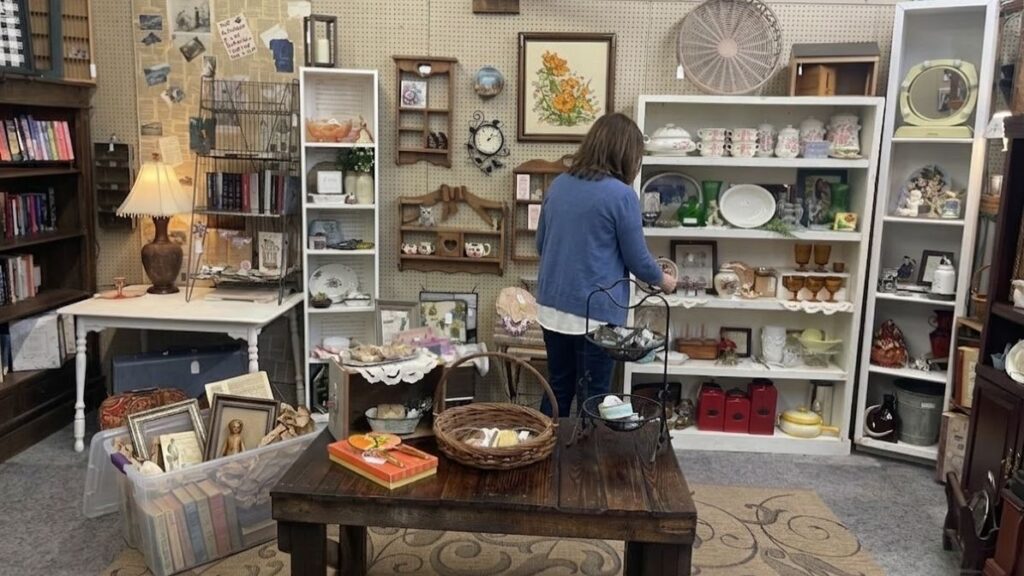
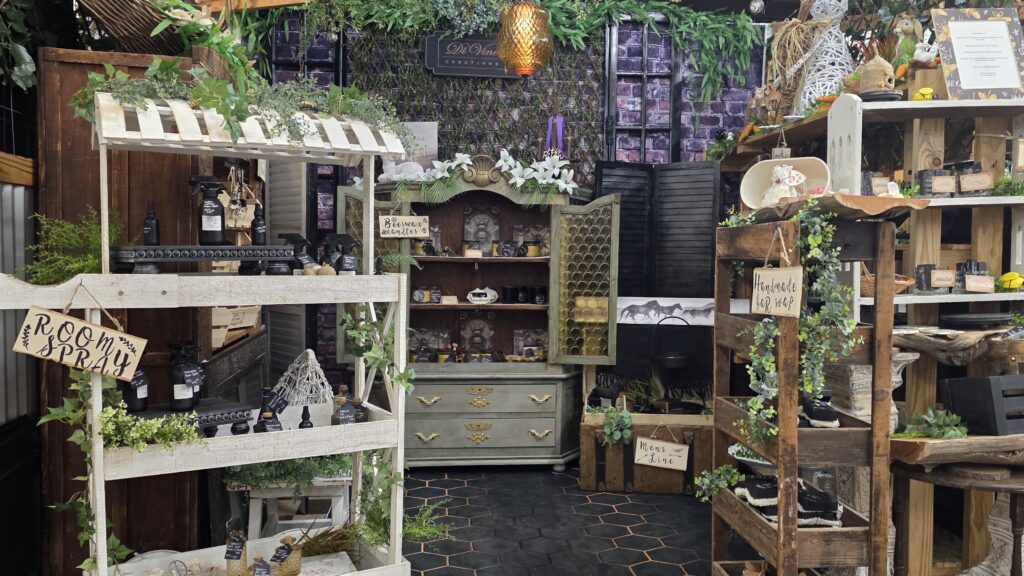
One of the easiest ways to keep a booth looking full is by using vertical display space.
Shelves, ladder displays, wall grids, and stacked crates allow vendors to build displays upward instead of spreading everything across the floor.
Vertical displays help booths appear fuller while still leaving space for customers to move comfortably through the booth.
Common vertical display ideas include:
- ladder shelves
- stacked wooden crates
- wall grid panels
- pegboard displays
- hanging baskets
- tall shelving units
Vertical displays also make items easier to see from the aisle, which can draw customers into the booth.
If you’re still building your booth layout, you may find it helpful to read How to Design an Antique Mall Booth That Sells, which explains how booth structure and display design influence customer behavior.
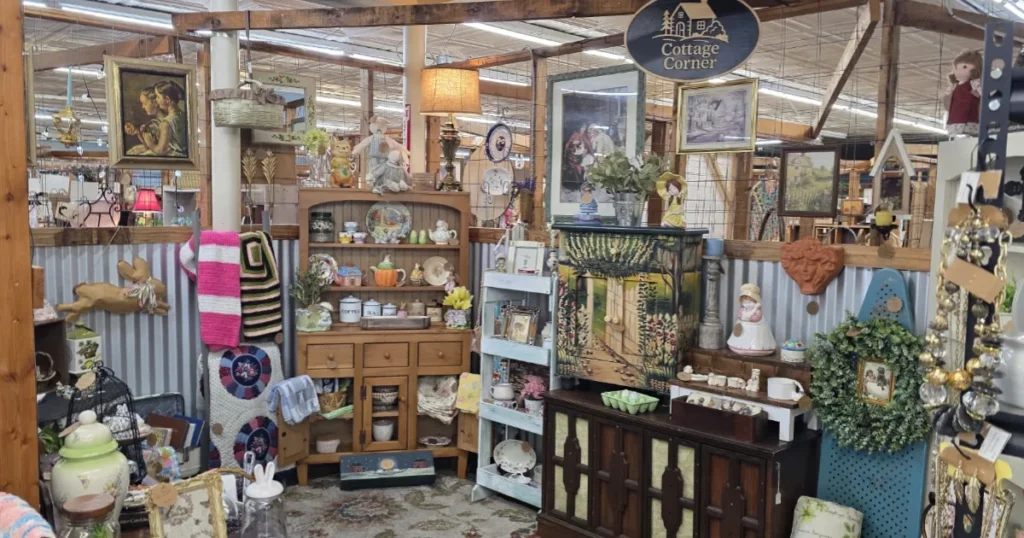
Creating Layers and Depth
Flat displays often begin to look empty after just a few items sell.
Creating multiple levels within a display helps prevent this.
Many vendors use simple objects to add height and depth to their displays, such as:
- wooden crates
- small stools
- stacked books
- vintage suitcases
- decorative boxes
- riser shelves
These layers allow fewer items to fill more visual space, helping the booth maintain a full appearance.
Layered displays also make booths more visually interesting, which encourages customers to stop and browse.
Facing Items Forward
Another common mistake vendors make is leaving items turned sideways or hidden behind other pieces.
Facing items forward allows customers to see them clearly and makes displays appear fuller.
Examples of forward-facing displays include:
- plates displayed in plate racks
- framed art or signs staggered on shelves
- books or records standing upright
- small collectibles placed near the front of shelves
This small adjustment can make a display look more complete without adding any additional merchandise.
Spreading Items Out Properly
When vendors first set up a booth, it can be tempting to group items tightly together.
However, this often leads to displays that look empty after just a few sales.
Leaving a small amount of spacing between items during the initial setup allows the booth to maintain balance even as items sell.
Benefits of spacing displays properly include:
- booths remain visually balanced longer
- customers can see individual items more easily
- displays look intentional instead of crowded
- items are easier for customers to pick up
This technique helps the booth continue looking full between restocking visits.
Rotating Inventory
Not every item needs to be placed in the booth at the same time.
Many successful vendors keep additional inventory stored at home and rotate new items into their booth regularly.
Inventory rotation helps vendors:
- keep their booth looking fresh
- avoid overcrowding the space
- give repeat shoppers something new to discover
- maintain better display balance
Customers who visit antique malls frequently often return to booths that consistently bring in new items.
If you’re still building your sourcing system, see Where Do Antique Booth Vendors Find Inventory?
Rearranging Displays When Restocking
Restocking should not only involve adding items.
Experienced vendors often take a few minutes to adjust displays each time they visit their booth.
This might include:
- shifting items to fill empty spaces
- adjusting shelves or risers
- moving slower-selling items to new locations
- reorganizing displays to create new visual interest
Small changes can make a booth feel refreshed even if only a few new items are added.
If your booth feels stagnant or sales have slowed down, you may also want to read Troubleshooting a Sales Slump in Your Booth, which covers additional strategies for refreshing your space.
Avoiding the “Storage Unit” Look
While keeping a booth full is important, overcrowding can create a different problem.
Booths that contain too many items packed together can feel overwhelming to customers.
Signs that a booth may be overcrowded include:
- customers struggling to walk through the booth
- items stacked too tightly together
- difficulty picking items up
- displays that appear cluttered instead of organized
The goal is balance — a booth that feels full but still comfortable to browse.
Overcrowded booths are actually one of the most common problems new vendors face. If you want to see more examples of mistakes that affect booth performance, see The Common Mistakes Antique Mall Booth Vendors Make.
Inventory Depth Still Matters
Even with good display techniques, booths still require enough inventory to stay visually appealing.
Many successful vendors maintain inventory with a sell value several times higher than their monthly rent. This gives customers more opportunities to discover something they want to buy.
Inventory depth plays a major role in booth performance.
If you want a deeper look at inventory levels and how they affect sales, see How Much Inventory Does an Antique Mall Booth Really Need?
Maintaining the right inventory balance helps prevent booths from looking empty too quickly.
Why Booth Presentation Matters
Customers are naturally drawn to booths that appear well maintained and visually full.
Even if two booths carry similar types of merchandise, the booth that looks organized and complete will usually attract more attention.
Booths that perform well typically combine:
- strong inventory depth
- thoughtful display design
- layered visual merchandising
- regular restocking and maintenance
If you’re working on improving your booth sales overall, you may also want to read How to Increase Sales in an Antique Mall Booth, which explores several ways vendors can improve booth performance.
Final Thoughts
Keeping a booth looking full without overcrowding it is part of the art of booth selling.
Successful vendors combine thoughtful displays, layered layouts, and steady inventory rotation to maintain a booth that feels active and inviting.
Over time, vendors develop a routine for adjusting displays and bringing in fresh items so their booth never appears empty or picked over.
These small habits can make a significant difference in booth performance and customer engagement.
Related Guides for Booth Vendors
If you’re learning about antique mall booths, these guides may also help:
- How Much Inventory Does an Antique Mall Booth Really Need
- How Often Should You Restock an Antique Mall Booth
- How to Design an Antique Mall Booth That Sells
- How to Increase Sales in an Antique Mall Booth
- Why Your Antique Booth Isn’t Selling
- What Sells Best in Antique Mall Booths? A Guide for Vendors
- Common Mistakes Antique Mall Booth Vendors Make
Free Vendor Resources
We have a number of free booth vendor tools to use if you need help with figuring out your numbers. You will see that each calculator serves a different purpose but for an all in one I recommend the Booth Profit Calculator Pro. These tools were designed with the principles laid out in the Vintage Hustle Book Series.
Vintage Hustle Book Series
If you’re interested in learning more about booth strategy, inventory planning, and vendor growth, the Vintage Hustle series dives deeper into the principles behind building profitable antique mall booths. If you prefer to get through Amazon or ebook click here.